
Analysis of the Advantages and Characteristics of Stainless Steel Fans
Release time:
2023-01-07
Stainless steel fans have many advantages such as low power consumption, high efficiency, stable operation, and low noise. The main components consist of a series of motors, bearing seats, thermal insulation boxes, and temperature-resistant boxes. The impeller can operate continuously in hot air below 1000℃ without deformation and does not require any cooling liquid. Regular injection of extreme pressure lithium-based composite grease protects the fan bearings, offering easy installation, convenient maintenance, and a long service life. It adopts a front bearing design principle, placing two bearings at the front end of the blades and the rear end of the motor to achieve better dynamic balance configuration, facilitating heat dissipation.
Stainless Steel FanIt has many advantages such as low power, high efficiency, stable operation, and low noise. The main part consists of a series of motors, bearing seats, thermal insulation boxes, and temperature-resistant boxes. The impeller can operate continuously in hot air below 1000℃ without deformation and does not require any cooling liquid. Regular injection of extreme pressure lithium-based composite grease protects the fan bearings, making it easy to install, maintain, and prolong its service life; it adopts a front bearing design principle, placing two bearings at the front end of the blades and the rear end of the motor to achieve better dynamic balance configuration and facilitate heat dissipation.
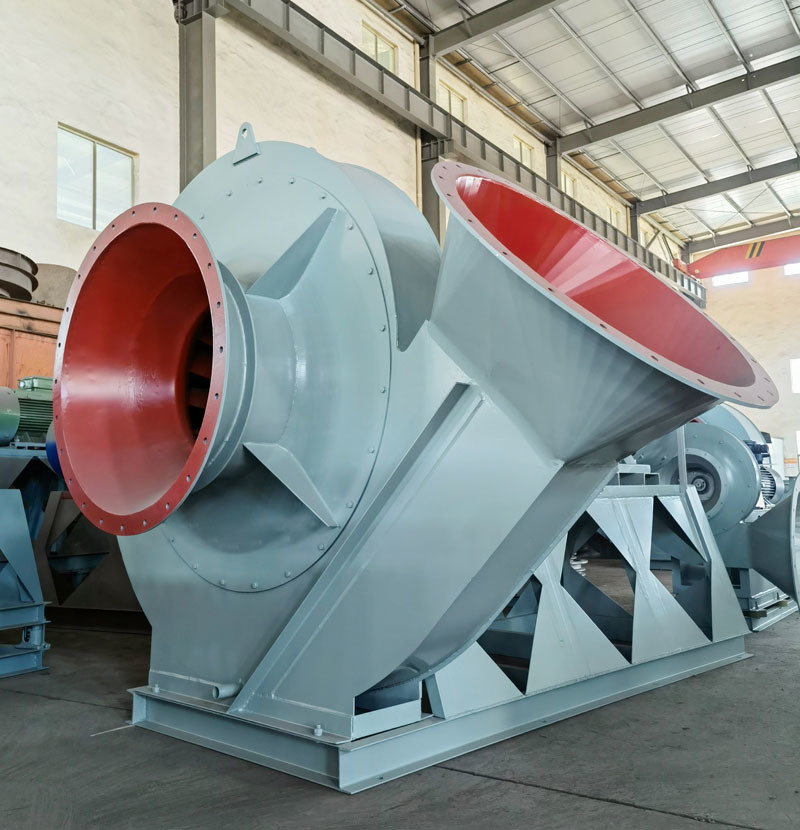
Characteristics of Stainless Steel Fans
Widely used in industrial production. Due to different properties, different workplaces have different requirements for fans. For example, in cases with high corrosion resistance requirements, stainless steel fans are used when the shell fan does not meet the requirements. Stainless steel fans are specifically designed and manufactured for the petrochemical and machinery industries. When harmful gases are introduced, they have a strong corrosive effect on general steel.
Compared to ordinary fans,Stainless Steel Fanthey can not only meet the requirements of natural ventilation but also significantly extend the service life of mechanical equipment. For users, this equipment can be used to transport certain acidic and alkaline corrosive gases, and can also transport high-temperature gases below 500 degrees. If high-quality titanium steel is used, the temperature can reach above 1000℃ with broadband access technology.
With its outstanding advantages, stainless steel fans have been applied in manufacturing industries such as chemical plants, metallurgy, carbon black, and ceramics. They are ideal equipment for transporting organic waste gas from kilns, equipment temperature transfer, and ignition. Key components of this equipment include centrifugal impellers, casings, air ducts, drive system components, and bases.
The blades are the key components of stainless steel fans. When designing the structure of centrifugal fans, the design is mainly based on the theory of new high-efficiency fans, selecting appropriate materials according to different loads. It has reliable corrosion resistance and heat resistance. After the impeller is produced, it is calibrated based on static data and stable balance. This is G5.6 (higher than the national industry standard G6.3).
Secondly, the casing and base are also key components of stainless steel fans. Generally, the casing is made of corresponding materials according to different working conditions, with reliable corrosion resistance and heat resistance, and is welded into a whole with the frame to ensure the rigidity of the entire device.
In addition,Stainless Steel Fanthe air inlet is made of high-quality stainless steel plates, with a converging streamlined structure overall, and anchor bolts. The drive system group of the stainless steel fan mainly consists of main shaft bearings, rolling bearings, rolling bearing boxes, couplings, etc. The main shaft bearings use high-quality high-temperature resistant materials, treated by quenching to ensure sufficient strength.
Related News

Tel: 0510-87601805
E-mail: shenhong@zt-fan.com
Address: No. 2, Wendong East Road, Industrial Concentration Zone, Xushe Town, Yixing City, Jiangsu Province (No. 58, Original East Road)

Scan QR code
Plus WeChat
Copyright © 2024 Jiangsu ZT Fan Co., Ltd. Business License


