
What is the pressure at the outlet of the high-temperature fan?
Release time:
2021-10-31
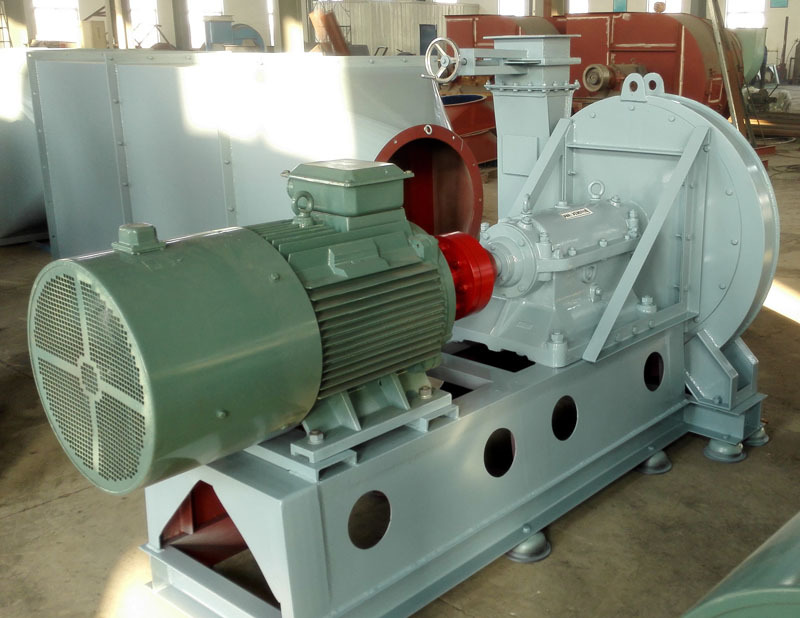
The pressure at the inlet of the high-temperature fan usually reflects the resistance condition of the kiln system. For example, some companies have an inlet pressure of -5000Pa, while others reach -8000Pa. This is related to the size and structural characteristics of the preheater system, the output of the kiln, coal consumption, and the control of air leakage. However, few people pay attention to the pressure at the outlet of the high-temperature blower. So, let's find out what the pressure at the outlet of the high-temperature fan is!
The high-temperature fan is one of the important pieces of equipment in cement kilns, ensuring the combustion air for fuel and creating a negative pressure environment, which guarantees the operation of the floating preheater and decomposition furnace. The pressure at the inlet of the high-temperature fan usually reflects the resistance condition of the kiln system; for some enterprises, the inlet pressure is -5000Pa, while for others, it reaches -8000Pa. This is related to the size and structural characteristics of the preheater system, the output of the kiln, coal consumption, and the control of air leakage. However, few people pay attention to the pressure at the outlet of the high-temperature fan. So, let's find out what the pressure at the outlet of the high-temperature fan is!
1) The outlet pressure of high-temperature fans in some cement enterprises.
The outlet pressures of high-temperature fans in several cement enterprises have been compiled. As shown in the table below, although the number of cases is not large, there is a significant difference in the outlet pressures of high-temperature blowers among different enterprises, with the lowest being -100~-200Pa and the highest being -1000~-2000Pa. So why is there such a large discrepancy? What is the outlet pressure of the high-temperature fan in your enterprise?
Theoretically, when the exhaust gas exits the high-temperature fan, if there are no subsequent raw material grinding and waste gas treatment processes, and it is directly discharged into the atmosphere, the outlet pressure of the high-temperature fan should be slightly positive. The subsequent raw material grinding circulating fan, tail exhaust fan, and tail gas discharge cause the high-temperature fan outlet to generate negative pressure.
2) What is the ideal negative pressure at the outlet of the high-temperature fan?
Theoretically, the circulating fan and tail exhaust fan downstream of the high-temperature fan only need to remove all the exhaust gas discharged from the high-temperature fan, just like the kiln head cover. At this time, the outlet of the high-temperature fan should have a slight negative pressure of -50~-200Pa.
3) Why is the negative pressure at the outlet of some enterprises' high-temperature fans so high?
Let's imagine the outlet of the high-temperature fan as the kiln head cover. If the negative pressure of the kiln head cover increases, what could be the reason? The high-temperature fan and the exhaust fan must have increased in size. The same applies to the outlet of the high-temperature fan; the increase in outlet pressure is caused by the enlargement of the circulating fan or tail exhaust fan. So why does it increase? I think there may be two reasons.
First, the central control operator believes that the materials for the enlarged circulating fan are very good. If the kiln system is not considered, as long as the raw material grinding system does not leak air, even if the circulating blower is enlarged, the flue gas flow within the raw material grinding will not increase; of course, the raw material grinding system cannot be leak-free, so after increasing the circulating fan, the increased flue gas flow largely depends on the increase in system air leakage.
Second, excessive resistance loss in the preheater system helps the circulating fan pull air from the kiln along with the high-temperature fan. Some enterprises cannot meet the air supply demand of the kiln system solely relying on the high-temperature fan due to excessive resistance loss in the preheater system, such as excessive output or small preheater size. At this time, by increasing the circulating fan, the high-temperature fan can work together to overcome the resistance of the kiln system, creating a "fan series" effect. The outlet and inlet pressures of high-temperature fans in some enterprises have been compiled. As shown in the table below, it can be seen that the outlet pressure and inlet pressure of some enterprises' high-temperature fans are basically proportional. However, the current sample size is small, and more data needs to be collected for analysis.
The above introduction is about the outlet pressure of high-temperature fans. Additionally, in some enterprises, the measurement points for the outlet pressure of high-temperature fans are too close to the high-temperature fan itself, which greatly affects the measurement, resulting in higher recorded pressures that are not actually high. Similar to high-temperature fans, there are circulating fans. The outlet negative pressure of some enterprises' circulating fans can also be analyzed using the same method.
Related News

Tel: 0510-87601805
E-mail: shenhong@zt-fan.com
Address: No. 2, Wendong East Road, Industrial Concentration Zone, Xushe Town, Yixing City, Jiangsu Province (No. 58, Original East Road)

Scan QR code
Plus WeChat
Copyright © 2024 Jiangsu ZT Fan Co., Ltd. Business License


