
Next, I will talk about the operation of stainless steel fans and the reasons for their damage.
Release time:
2021-12-03
Next, I will talk about the operation of stainless steel fans and the reasons for their damage. In order to ensure the stable operation of stainless steel fans, in addition to pre-start checks, it is also necessary to start the fan equipment according to the correct methods and steps. Next, I will introduce the startup operation of stainless steel fans. Let's discover together.
Next, I will talk aboutStainless Steel Fanthe operation and causes of damage
Starting operation of the stainless steel fan
To ensure the stable operation of the stainless steel fan, in addition to pre-start checks, it is also necessary to start the fan equipment according to the correct methods and steps. Next, I will introduce the starting operation of the stainless steel fan. Let's discover together.
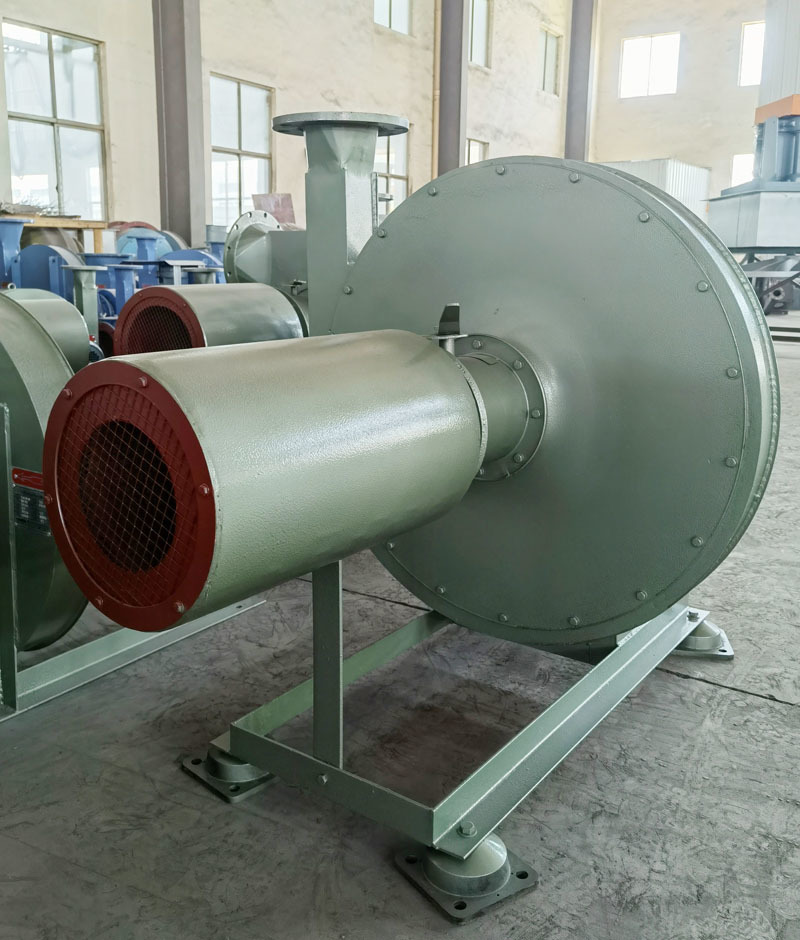
1.Stainless Steel FanPre-start checks:
1. Check whether the air inlet guard is installed securely and stably, and whether there are any debris within 3m on the air inlet side.
2. Check whether the connection with the damper is firm, whether the damper joint is correct, and whether there is any air leakage.
3. Use a small stick to pull the blade 2-3 turns to check if it is flexible or stuck.
2. Normal start after checks:
1. The stainless steel fan should be started intermittently, not all at once, to avoid the duct being blown away.
2. When there are two or more explosion-proof switches at the installation site, the explosion-proof switches should be listed and their purposes indicated to avoid misoperation.
3. Move the handle of the explosion-proof switch to the forward position, press the start button, and the fan will be powered on.
4. When two stainless steel fans are connected in series, the other fan should be started only after the initial unit has started and is running normally, and they cannot be started simultaneously.
3. Observe whether the operation is normal:
1. After entering normal operation, check whether the operating sound of the stainless steel fan is normal, and whether the body is vibrating or shaking.
2. After running normally for 10 minutes, leave without any abnormalities and proceed with other work.
3. Regularly check the duct for any damage, compression, distortion, breakage, detachment, and air leakage. If any of these occur, they should be dealt with promptly.
Stainless Steel FanIt is a fluid-driven machine that relies on input mechanical energy to increase gas pressure and transport gas. The fan is a common abbreviation for gas compression and gas transport machinery in China. It usually refers to devices including copper drums and wind power.
Stainless steel fans are widely used for ventilation, dust removal, and cooling in factories, mines, tunnels, cooling towers, vehicles, ships, and buildings, as well as for ventilation and air intake in boilers and industrial furnaces; cooling and ventilation in air conditioning equipment and household appliances; grain drying and selection, wind tunnel gas sources, air cushion boat inflation and propulsion, etc.
Therefore, when you start using a stainless steel fan, you should start it according to the correct methods and steps; otherwise, incorrect starting methods may also cause some damage to the fan equipment.
What are the causes of damage to stainless steel fans?
1. If the motor loses a phase during operation,
the centrifugal fan will experience increased vibration, abnormal noise, reduced speed ratio, increased current, and rapid temperature rise of the motor, which may lead to the burning of the stainless steel fan motor.
2. Damage to rolling bearings.
Damage to the rolling bearings of the stainless steel fan can easily lead to a rapid rise in the temperature of the iron core. Damage to the fan slot insulation layer and inter-turn insulation layer can cause surface winding resistance inter-turn short circuit faults, which in turn can damage the motor.
3. Closing the electric valve.
When the electric valve of the stainless steel fan is closed, it can damage the load and the motor.
4. Return of moisture.
Due to leakage or moisture in the distribution box or motor, reduced insulation, and lack of maintenance methods, it may cause damage to the motor of the stainless steel fan.
5. Other reasons.
There are also abnormal situations such as low or high working voltage of the stainless steel fan, loose connectors due to vibration, faults, dual-color short circuit rodent damage, and mismatched working voltage of imported motors with those in China (such as motors from Japan), which can also cause damage to the motor.
Related News

Tel: 0510-87601805
E-mail: shenhong@zt-fan.com
Address: No. 2, Wendong East Road, Industrial Concentration Zone, Xushe Town, Yixing City, Jiangsu Province (No. 58, Original East Road)

Scan QR code
Plus WeChat
Copyright © 2024 Jiangsu ZT Fan Co., Ltd. Business License


