
How to deal with vibrations caused by severe wear in the bearing area of high-temperature fans
Release time:
2021-12-09
High-temperature fans in the cement industry are key equipment in the entire clinker production process. Generally speaking, they have high power, poor operating conditions, large flow rates, and high speeds. A certain company's high-temperature fan has bearing position wear, resulting in high vibration values during production operation. The bearings are damaged, and there is no effective solution on site.
Cement industryHigh-temperature fanIt is a key piece of equipment in the entire clinker production process. Generally, it has high power, operates in harsh environments, has a large flow rate, and runs at high speed. A company's high-temperature fan bearing position is worn, resulting in high vibration values during production. The bearing is damaged, and there is no effective solution on site.
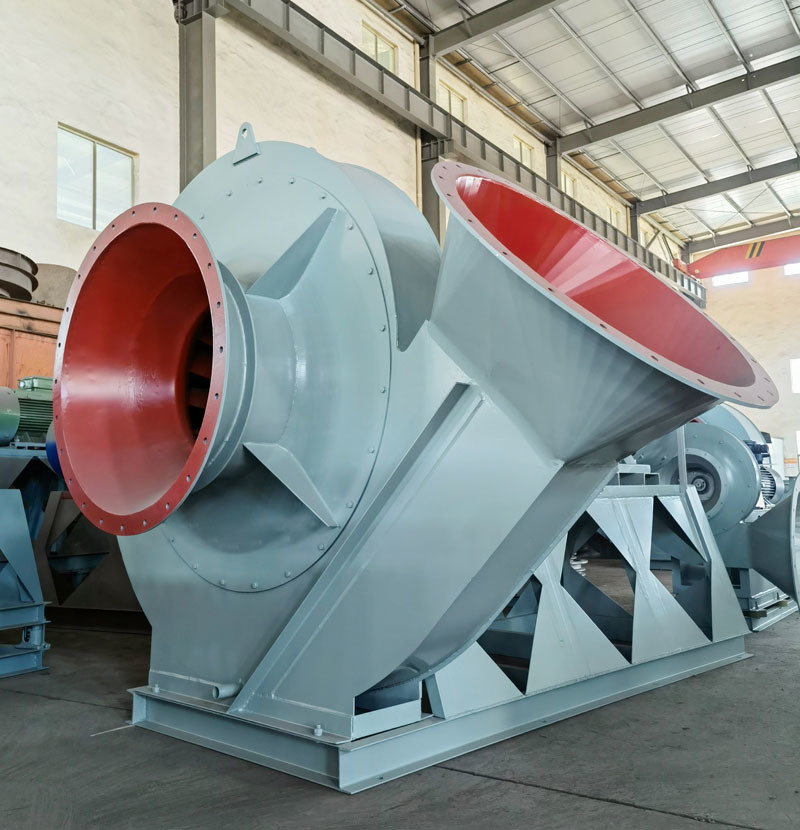
Equipment data: Impeller diameter Φ3600mm, equipment speed approximately 980r/min, bearing model 22244, bearing position diameter Φ220mm, wear amount approximately 1.3mm.
How to deal with vibration caused by severe wear at the high-temperature fan bearing position
High-temperature fanOnce the bearing position is worn and a gap is created, the bearing at that position loses its original support function during operation, and the wear on the shaft neck will become increasingly severe in a short time. Under the action of centrifugal force, the impeller will produce periodic or non-periodic vibrations, causing resonance in the fan casing, which will also affect the connection between the motor and the fan. In this case, long-term operation can lead to bending of the impeller rotor shaft, resulting in rotor shaft scrapping, which not only poses serious safety hazards to production but also causes significant economic losses to the enterprise. In response to this issue, the company decided to adopt the online repair process using Soler carbon nano polymer materials after comprehensive consideration. The steps to repair the wear at the high-temperature fan bearing position are as follows:
(1) Use oxyacetylene tools to bake oil at the bearing position;
(2) Use a grinder to polish the bearing position to be repaired;
(3) Mix carbon nano polymer materials in proportion;
(4) Install and tighten the tooling, ensuring the axial position of the tooling is correct;
(5) After the material cures, open the tooling and polish the repaired area; high-temperature fan
(6) Remove excess repair material from the front and rear ends of the bearing position, and measure the interference fit tolerance requirements between the bearing and the shaft neck;
(7) After repair, the bearing can be hot installed, and the machine can be started and operated.
Fan maintenance recommendations:
1. Regularly remove dust, dirt, and other impurities from the inside of the fan to prevent rust. High-temperature fan
2. Lubricants should be replaced after each maintenance. Under normal circumstances, lubricants should be replaced according to actual conditions.
3. Regular or irregular maintenance can reduce the frequency of failures, extend the service life of the fan, and improve the overall performance of the fan.
FRP fans are corrosion-resistant fans with good anti-corrosion performance. They are generally used for corrosive gases such as acidic and alkaline waste gases. However, the characteristic of FRP fans is that they can only be used at room temperature and cannot withstand high temperatures. The site temperature can reach over 100 degrees. In this case, FRP fans will be damaged after a period of use. The waste gas treatment equipment at this plant has the characteristic of high temperature, so it is necessary to select a resistantHigh-temperature fanHigh-temperature fans have many characteristics, and there will be differences in manufacturing. Common materials are stainless steel, and high-temperature hubs also require special design and treatment.
Related News

Tel: 0510-87601805
E-mail: shenhong@zt-fan.com
Address: No. 2, Wendong East Road, Industrial Concentration Zone, Xushe Town, Yixing City, Jiangsu Province (No. 58, Original East Road)

Scan QR code
Plus WeChat
Copyright © 2024 Jiangsu ZT Fan Co., Ltd. Business License


